
When a basement smells musty, shows damp spots, or develops white mineral stains, many homeowners look first at the foundation walls. That makes sense, but gutter problems causing basement moisture are often the issue that starts the chain. Water falling from the roof or spilling from a clogged gutter can soak the soil beside the house, increasing pressure against the foundation and creating a path for leaks.
Older homes are especially vulnerable because their gutters may be undersized, loosely attached, rusted through, or connected to short downspouts. Before paying for interior waterproofing, know what matters first: control roof water at the roofline, move it away from the foundation, and then investigate any remaining moisture.
How gutter water reaches the basement
A roof collects a surprisingly large volume of water during a storm. If a gutter is blocked by leaves, it overflows at the fascia instead of carrying water toward a downspout. That overflow can run behind the gutter, stain the siding, and fall directly beside the foundation. A downspout that ends only a few inches from the house creates a similar problem, even when the gutter itself looks clean.
The soil beside an older foundation can become saturated after repeated storms. Water then finds weak points, including cracks in poured concrete, gaps in masonry mortar, joints between the footing and wall, and openings around utility lines. Hydrostatic pressure can push moisture through those areas. In a basement with a dirt floor, moisture may also rise from below rather than enter through the wall.
This is why gutter problems causing basement moisture can look like a foundation failure. The visible symptom may be a damp corner, but the real source could be a missing downspout extension ten feet away. Water follows soil grades and underground paths that are not obvious from inside the basement.
Warning signs to inspect outside
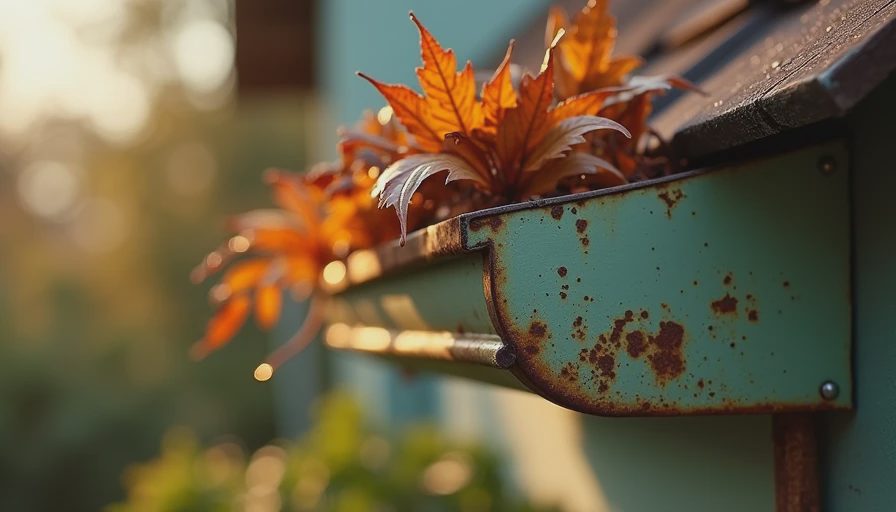
Start your inspection during or shortly after a moderate rain. Watch where water leaves the roof and whether it spills over the gutter edge. Look for sagging sections, peeling paint on the fascia, rust holes, loose spikes, and dark streaks on the exterior wall. A gutter that slopes the wrong direction may hold standing water long after the storm ends.
Check every downspout connection. The elbow should fit tightly, and the outlet should discharge far enough from the foundation to prevent pooling. A practical starting point is a rigid extension that carries water at least four to six feet away, although the best distance depends on the lot slope and local drainage. Splash blocks can help on a mild grade, but they are not a substitute for a connected extension when water still collects near the wall.
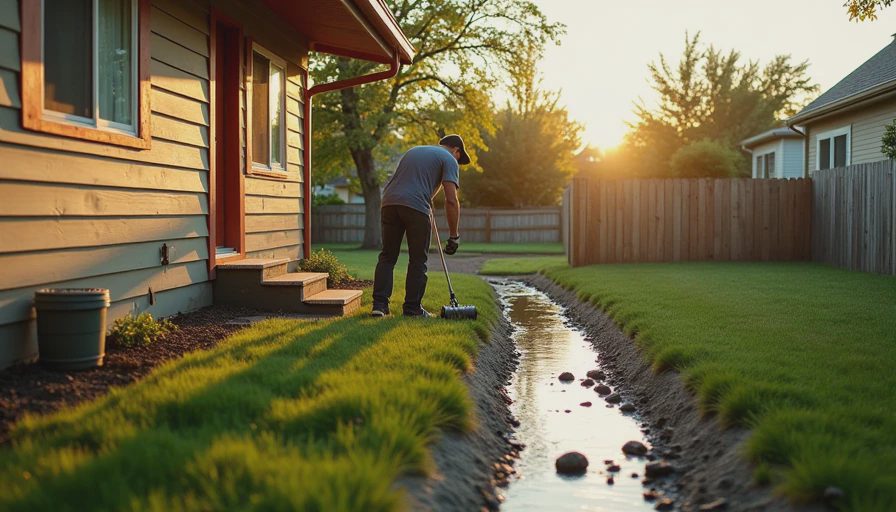
Look at the ground as well. Soil should generally slope away from the house rather than form a shallow bowl beside it. Settling is common around older foundations, porch additions, buried utility work, and recently disturbed landscaping. Even a properly functioning gutter cannot solve a low spot that directs water back toward the basement.
Common gutter repairs and realistic costs
A basic gutter cleaning often costs about $100 to $250 for a typical home, with higher prices for steep roofs, multiple stories, or heavy debris. Reattaching a loose section may cost $150 to $400, while replacing a short damaged run can range from $300 to $900 depending on material and access. Aluminum gutters are common and relatively easy to repair; older galvanized steel may be rusted at seams and worth replacing rather than patching repeatedly.
Downspout extensions are among the least expensive improvements. A homeowner may spend $20 to $80 on materials for a straightforward setup. A contractor-installed extension, buried drain line, or pop-up emitter can cost several hundred dollars or more. Buried drainage should not be installed blindly: it needs a suitable outlet, correct slope, and a route that does not send water toward a neighbor or a failing retaining wall.
Gutter problems causing basement moisture often require more than cleaning. If water is leaking behind the gutter, inspect the drip edge, fascia board, and roof-to-gutter transition. Rotted wood may need repair before new gutters are installed. A new gutter attached to damaged fascia is a short-term cosmetic fix, not a durable repair.
When gutters are not the whole explanation
A dry exterior does not prove that the foundation is sound. Plumbing leaks, a failed sump pump, condensation, high indoor humidity, and groundwater rising beneath the slab can all create basement moisture. If dampness appears even during dry weather, inspect supply lines, water heaters, washing machine connections, and the sump system.
The pattern of the moisture provides useful clues. Wetness near the top of a wall often points toward roof runoff, window wells, or masonry joints. A horizontal line near the floor may relate to slab or footing seepage. A single wet area after heavy rain suggests a localized drainage issue, while moisture spread across several walls calls for a broader evaluation of grading, groundwater, or foundation drainage.
Do not seal a damp wall with paint and assume the problem is solved. Waterproof coatings can hide stains temporarily while water continues to move behind the coating. If cracks are widening, walls are bowing, floors are heaving, or water arrives quickly during storms, arrange a professional inspection rather than relying on a cosmetic patch.
A practical repair sequence for an older home
First, photograph interior stains and mark their height and location. Record whether they appear after light rain, severe storms, snowmelt, or no precipitation at all. Next, clean the gutters and confirm that every downspout carries water away from the foundation. Correct obvious grading problems and remove soil or mulch that touches siding or masonry.
After the next significant rain, inspect the basement again. If the area remains dry, the drainage correction may have addressed the source. If water still enters, test the sump pump, examine window wells, and have the foundation and exterior drainage reviewed. This sequence prevents homeowners from spending thousands on interior systems before completing inexpensive roof-water corrections.
Gutter problems causing basement moisture should also be checked seasonally. Clean gutters in late fall and again when spring debris builds up. After strong wind, inspect for shifted sections and missing downspout elbows. If trees overhang the roof, guards can reduce debris, but no guard eliminates maintenance entirely.
Choosing a trustworthy local contractor
A dependable contractor should trace the water path rather than immediately recommend a full basement waterproofing package. Ask for photos of the failed gutter, the discharge area, and any grading defect. The estimate should identify quantities, materials, outlet locations, and whether fascia or siding repairs are included. Vague language such as “fix drainage” is not enough.
Get separate prices for gutter repair, downspout extensions, grading, and interior waterproofing when possible. That makes the priorities clear and helps you compare proposals from a gutter company, drainage contractor, or foundation specialist. A trustworthy local contractor should be able to explain why the proposed work fits the observed moisture pattern.
The goal is not simply a cleaner roofline. It is to interrupt the path that carries water from the roof to the basement. Fix the real problem, not just the visible stain, and older homes usually give you warning signs before they give you a much larger bill.