When the furnace struggles on the coldest nights or the air conditioner runs constantly without keeping up, the question of repair versus replacement arrives quickly. In an older house the answer is seldom determined by the equipment age alone. The condition of the ductwork, the amount of air leakage in the building, the insulation levels, and the way the system was originally matched to the house all influence whether a repair will restore reliable comfort or whether replacement offers the more practical path.
Thinking clearly about repair vs. replace for HVAC in an old house starts with separating the performance of the equipment from the performance of the distribution system and the building envelope. This article outlines the observations and questions that help make that separation.
What “Repair” Can Reasonably Address
Some problems are confined to the equipment itself and respond well to targeted work.
Component failures on an otherwise sound system
A failed capacitor, a worn blower motor, a cracked heat exchanger that is still within a replaceable range, or a control board that has reached the end of its life can often be corrected without replacing the entire unit. If the rest of the system has been maintaining comfort and the repair restores normal operation, the equipment may continue to serve for additional seasons.
Routine maintenance that has been deferred
Dirty coils, clogged filters, low refrigerant charge caused by a repairable leak, or neglected burner cleaning can produce symptoms that look like system failure. Restoring proper maintenance and correcting simple faults sometimes returns the system to acceptable performance.
Controls and zoning issues
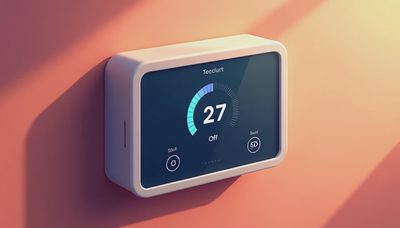
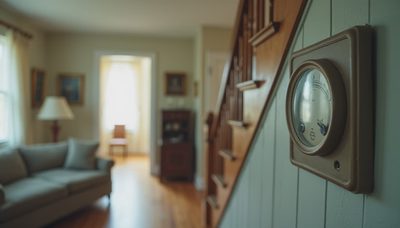
Thermostats, zone dampers, and simple control wiring problems can create uneven temperatures or short cycling that feel like equipment failure. Addressing the controls leaves the main heating and cooling units in place.
Repair makes the most sense when the core equipment is still mechanically sound, the distribution system can deliver air adequately, and the house itself is not imposing an unreasonable load.
Conditions That Shift the Balance Toward Replacement
Other patterns suggest that continued repair will only postpone a larger decision.
Repeated major failures within a short period
When the same system requires significant repairs in consecutive seasons, the cumulative cost and the likelihood of another failure rise. At that point the remaining useful life becomes harder to predict.
Inability to maintain comfort despite repairs
If rooms remain too hot or too cold after the equipment has been restored to design operation, the limitation often lies outside the unit—in the ducts, the returns, or the building envelope. Replacing the equipment alone may not correct the comfort problem.
Age combined with declining efficiency and parts availability
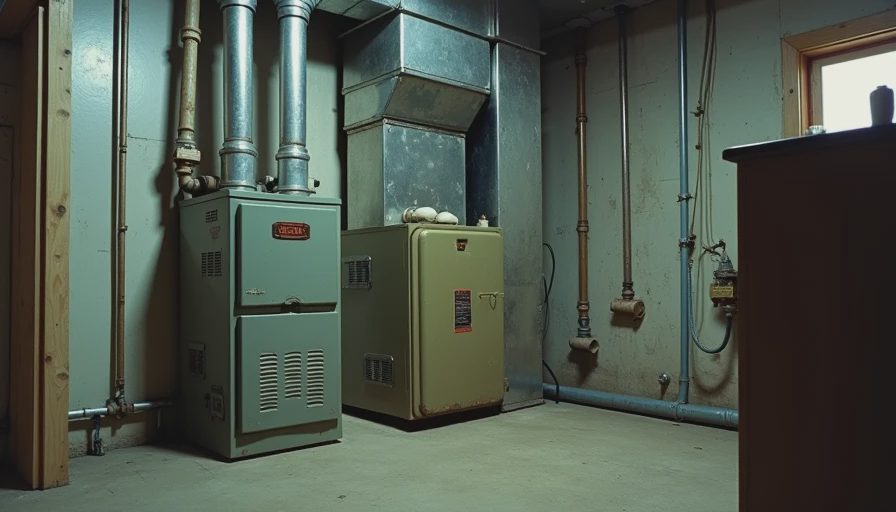
Older furnaces and air conditioners eventually reach a stage where major components are difficult to source and the efficiency is far below current standards. When a large repair is required on equipment that is already near the end of typical service life, replacement often becomes the clearer economic and performance choice.
Safety-related failures
A cracked heat exchanger, persistent carbon monoxide concerns, or electrical problems that cannot be reliably corrected move the decision toward replacement for safety reasons, independent of age or cost.
The Role of Ductwork and Distribution
In many older homes the ducts are as important as the equipment.
Leaky or poorly insulated ducts
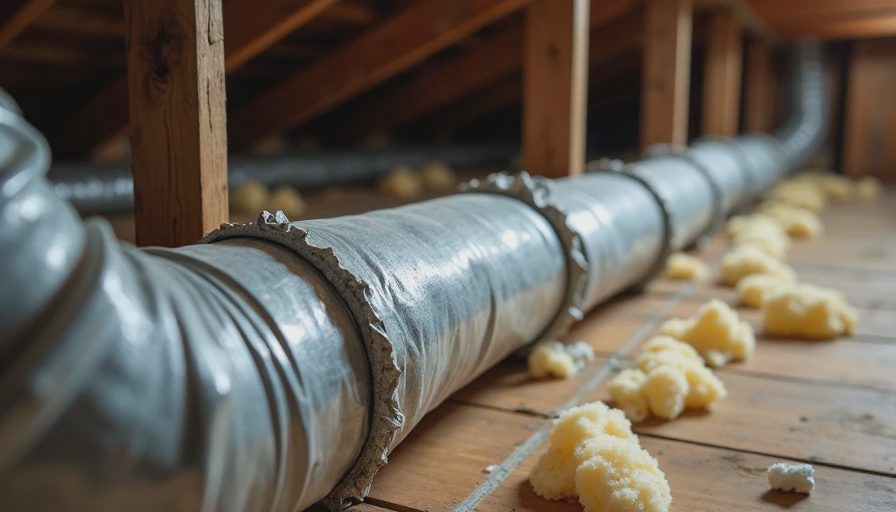
Ducts that run through attics, crawl spaces, or garages and that have loose joints or missing insulation lose heating and cooling capacity before the air reaches the rooms. Repairing or replacing the equipment without sealing and insulating those ducts leaves the same delivery losses in place.
Undersized or poorly laid-out runs
Original duct systems were sometimes designed for different equipment or different comfort expectations. Weak airflow at distant registers, rooms that never catch up, and excessive noise at the registers can indicate distribution limitations that new equipment will not automatically solve.
Inadequate return-air paths
Closed doors, missing transfer grilles, or returns located only on one floor restrict circulation. The equipment may be capable of producing enough conditioned air, yet the air cannot move freely through the house.
Evaluating the ducts and returns alongside the equipment prevents replacing a furnace or air conditioner only to discover that the comfort problems remain.
How the House Envelope Influences the Decision
The amount of heat the house gains or loses affects how hard any system must work.
Attic insulation and air sealing
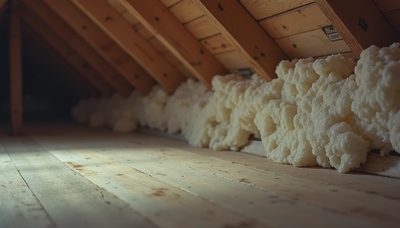
A poorly insulated or leaky attic increases the load on both heating and cooling equipment. Upper floors that stay hot in summer or cold in winter often reflect envelope conditions more than equipment capacity.
Window and air-leakage loads
Drafty windows and unsealed penetrations add to the work the system must do. In some cases reducing those loads through weatherstripping, sealing, or selective window improvement allows existing equipment to perform more adequately.
Matching capacity to the actual load
Oversized equipment that short-cycles or undersized equipment that runs continuously both produce comfort complaints. Accurate load calculation that accounts for the current insulation and air-leakage levels is more useful than simply matching the size of the old unit.
When envelope improvements are realistic, they can change the economics of repair versus replacement by lowering the demand the system must meet.
A Practical Sequence for Evaluating the Options
You can gather useful information before inviting formal proposals.
Document current performance
Note which rooms fail to reach comfortable temperatures, how long the system runs during extreme weather, and any unusual noises or odors. Record the age of the equipment if known and the history of recent repairs.
Inspect accessible ducts and the attic
Look for obvious disconnected sections, missing insulation, and the condition of the attic insulation and ventilation. These observations help separate equipment issues from distribution and envelope issues.
Check filters, registers, and basic maintenance items
Confirm that airflow is not being restricted by simple, correctable conditions before assuming major failure.
Consider the rest of the house plans
If other work—roofing, insulation, window improvement, or air sealing—is planned, the timing can influence whether to repair for a few more years or to replace as part of a larger improvement sequence.
Questions to Ask an HVAC Contractor
A contractor experienced with older homes should be able to discuss the whole system. Consider asking:
How much of the current comfort problem appears to come from the equipment itself versus the ducts or the building envelope?
If repair is recommended, what is a realistic expectation for remaining service life after the work?
If replacement is recommended, how will the new system be sized to the actual load of this house after accounting for insulation and air leakage?
What duct sealing, insulation, or balancing work should accompany either repair or replacement?
How will the proposed work address safety issues such as combustion air, venting, or carbon monoxide risk?
Listen for answers that refer to the specific conditions in your attic, ducts, and rooms rather than a single package recommendation.
Putting the Decision Together
Repair makes sense when the equipment is still mechanically sound, the distribution system can deliver air, and the house load is not excessive. Replacement becomes the more practical path when major failures repeat, comfort cannot be restored by repairing the unit alone, parts and efficiency have declined significantly, or safety concerns are present.
In an older home the ducts and the building envelope frequently influence the outcome as much as the furnace or air conditioner. Checking those elements alongside the equipment prevents replacing machinery only to leave the same uneven temperatures and high run times in place.
Start with a clear record of current performance, a look at the accessible ducts and attic, and a conversation that separates equipment issues from distribution and envelope issues. That sequence leads to a decision that fits both the system and the house it serves.