

Most owners of older homes notice the drafts first. A cold edge along the sash in winter, a faint movement of air on a windy day, or a room that never quite feels as warm as the thermostat setting suggests. What is less obvious is how steadily those drafts raise the amount of energy the heating and cooling system must use to maintain comfort.
The energy cost of drafty windows in aging homes is rarely a single dramatic number on a bill. It appears as longer run times, uneven temperatures between rooms, and a system that works harder than the outdoor conditions seem to require. Understanding where the air is leaking and how much it affects the overall load helps you decide whether weatherstripping and adjustment will be enough or whether larger improvements are justified.
How Air Leakage Around Windows Increases Energy Use
Windows are openings in the building envelope. When the seals, weatherstripping, and sash fit deteriorate, outdoor air enters and indoor air leaves. In winter the incoming air must be heated to room temperature. In summer the incoming air often carries heat and humidity that the cooling system must remove.
On older homes several typical conditions make the leakage more significant:
Original weatherstripping has compressed, cracked, or fallen away.
Wood sashes have shrunk or swollen with seasonal moisture changes, leaving gaps that no longer close tightly.
Frames have settled or shifted slightly, so the sash no longer meets the stops evenly.
Locked or latched positions no longer pull the sash firmly against the weatherseal.
Each small gap adds to the total volume of air that the heating or cooling system must condition. Because the leakage is continuous whenever there is a pressure or temperature difference, the effect accumulates over the entire season.
Signs That Window Drafts Are Affecting Energy Use
You do not need specialized testing equipment to recognize that air leakage is contributing to higher energy demand.
Rooms that lag behind the thermostat
If certain rooms with older windows consistently feel cooler in winter or warmer in summer than the rest of the house, the windows in those rooms are often part of the reason. The system may satisfy the thermostat in a central location while the leakier rooms continue to lose or gain heat.
Longer or more frequent system cycles
When the furnace or air conditioner runs longer than expected for the outdoor temperature, or cycles on more often, envelope leakage is one possible contributor. Windows are a common and accessible place to look first.
Visible or tactile drafts
Air movement you can feel along the edges of closed sashes, or a tissue or smoke pencil that flutters when held near the frame, confirms that air is passing through. The stronger and more widespread the movement, the larger the potential energy impact.
Condensation patterns
In cold weather, condensation that forms preferentially on the room side of the glass near the edges can indicate that cold air is leaking in and cooling the surface. While indoor humidity also plays a role, the pattern often aligns with the leakiest parts of the window.
Documenting which windows show the strongest drafts and which rooms feel the most affected gives a clearer picture of where improvement will matter most.

Estimating the Practical Impact Without Precise Calculations
Exact energy-loss figures require blower-door testing and modeling that most homeowners will not perform themselves. Useful approximations are still available from observation.
Compare similar rooms
If two rooms of roughly the same size and orientation have different window conditions—one with tight, well-sealed units and one with noticeable drafts—the difference in comfort and in how hard the system works to condition each room offers a rough sense of the impact.
Track seasonal behavior
Notice whether the drafts and the associated comfort problems are worse on windy days or on the coldest nights. Strong correlation with wind suggests pressure-driven leakage that is adding directly to the heating load.
Consider the number of affected windows
A single drafty window in a small room has limited whole-house effect. Multiple leaky windows on more than one floor, especially on the windward side of the house, add up to a more noticeable increase in the work the heating and cooling system must do.
These observations do not produce a precise dollar amount, yet they help rank the windows by priority and give a realistic sense of whether modest sealing work or more extensive improvement is likely to be felt in comfort and system run time.
Practical Steps That Reduce the Energy Cost
Not every drafty window needs immediate replacement. Several lower-intensity measures can reduce leakage while you decide on longer-term plans.
Replace or restore weatherstripping
Modern weatherstripping materials designed for the specific sash type (double-hung, casement, etc.) can close many of the gaps that develop with age. Proper installation that allows the sash to close fully without excessive force is important.
Adjust sashes and hardware
On wood windows, balances, hinges, and latches can often be adjusted or repaired so the sash seats more evenly against the frame. Even small improvements in contact reduce the free area available for air leakage.
Add or improve storm windows
Where original single-pane windows remain, a well-fitted storm window creates a second barrier and a still-air space that reduces both air leakage and conductive heat loss. The storm unit itself must seal reasonably well to deliver the benefit.
Air-seal the window frame to the wall
Gaps between the window frame and the rough opening in the wall are sometimes hidden by interior trim. Careful removal of the trim, sealing of the gap, and reinstallation can stop leakage that weatherstripping on the sash cannot address.
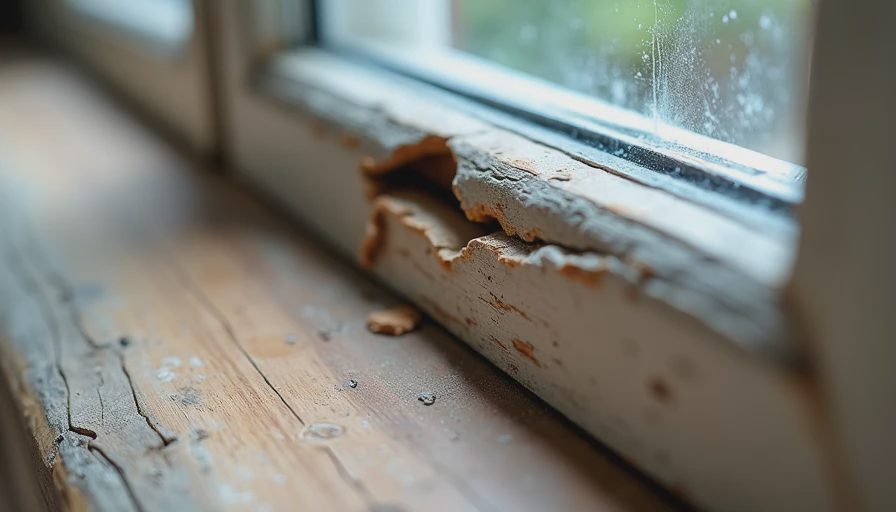
These steps are most effective when the frame and sash themselves are still structurally sound. Soft or decayed wood limits how tightly the unit can be sealed.
When Repair Gives Way to Replacement for Energy Reasons
If the frames are soft, the sashes no longer hold a consistent shape, or the majority of the insulated glass units have failed, the practical limit of repair is reached. At that point the energy benefit of replacement becomes easier to justify because the new units combine better air sealing, improved glazing performance, and reduced maintenance.
Even then, replacement does not have to be whole-house at once. Prioritizing the rooms that show the strongest drafts and the largest comfort complaints often delivers the most noticeable improvement first. A trustworthy window contractor should be able to discuss both the air-leakage performance of the proposed units and how the installation will seal the frame to the existing wall.
Questions That Help Focus the Decision
When you speak with a contractor or energy auditor, consider asking:
Which windows show the largest air-leakage contribution based on the observed drafts and room behavior?
What combination of weatherstripping, adjustment, and storm windows is realistic for the current units?
If replacement is recommended, how will the new installation address both the sash seal and the frame-to-wall air seal?
What change in comfort or system run time is reasonable to expect from the proposed work?
Clear answers that refer to the specific windows and rooms in your house are more useful than general claims about energy savings.
Putting the Energy Cost in Context
Drafty windows in an older home steadily increase the volume of air that must be heated or cooled. The cost appears as longer equipment run times, uneven room temperatures, and a system that works harder than the outdoor conditions alone would require.
Begin by locating the strongest drafts and noting which rooms are most affected. Then evaluate whether improved weatherstripping, sash adjustment, storm windows, or frame sealing can reduce the leakage enough to improve comfort and ease the load on the system. When the units themselves are no longer capable of holding a tight seal, replacement of the highest-priority windows becomes the more durable way to cut the ongoing energy cost.
Older windows often signal their energy impact through comfort long before the utility bill makes the connection obvious. Paying attention to the drafts and the rooms they affect helps you direct effort toward the openings that are actually raising the energy required to keep the house comfortable.